
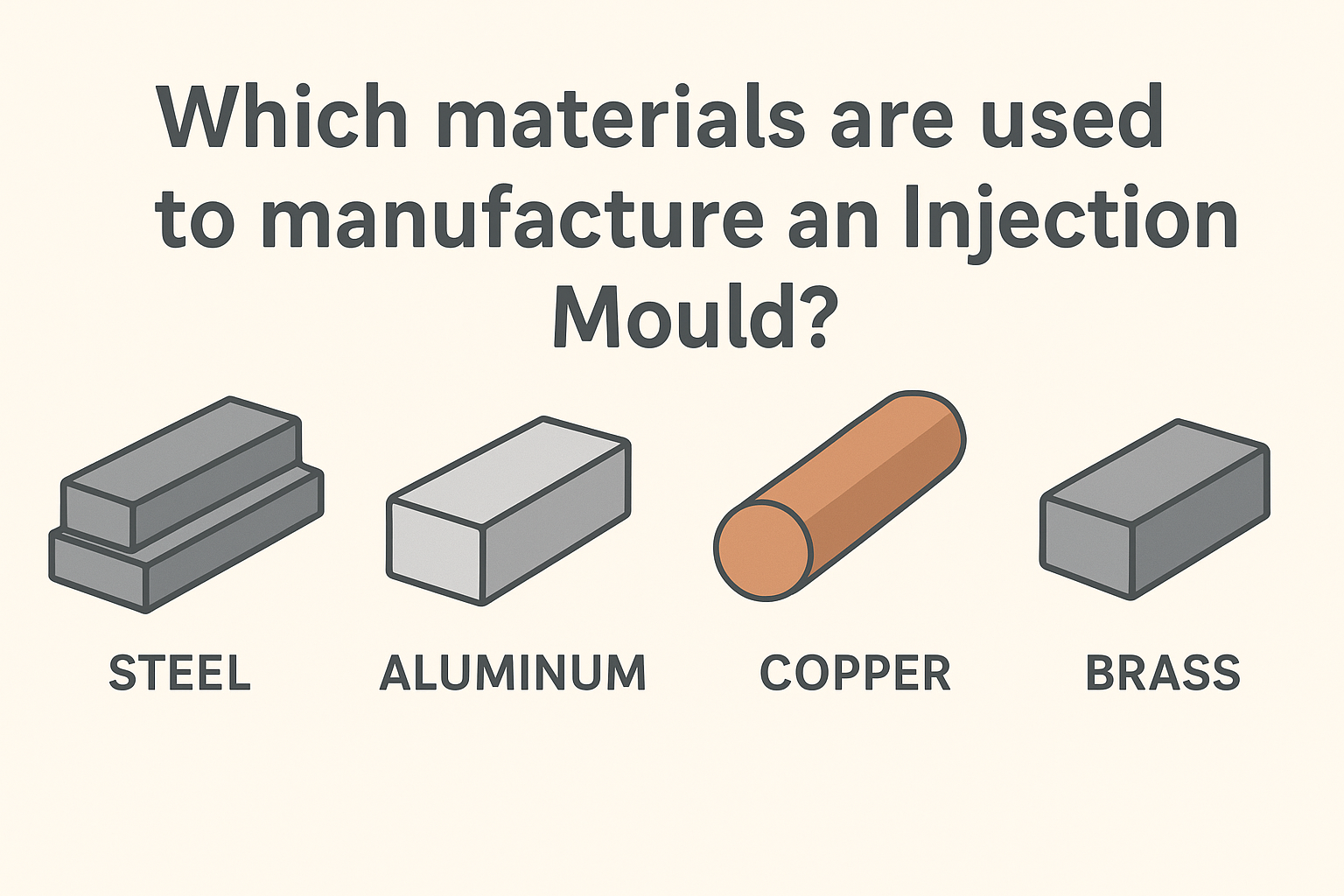
Materials Used for Injection Moulds
Injection moulds are commonly made from various metals, with steel and aluminium being the most prevalent choices. The selection of material largely depends on factors such as the part's design, production volume, and the type of plastic used. Here are some of the most common materials used to make injection moulds:
1. P20 Steel
P20 is a pre-hardened steel that is often used for creating moulds for thermoplastics. It is cost-effective and typically suitable for small to medium-sized parts. P20 steel offers a balance of performance and affordability, making it a popular choice for low to moderate volume production runs.
2. H13 Steel
H13 is a high-performance tool steel known for its excellent wear resistance, making it ideal for moulds that will undergo heavy use or for large, complex parts. Although it is more expensive than P20 steel, H13 offers superior heat resistance, making it suitable for both thermoplastic and thermosetting materials.
3. S7 Steel
S7 steel is a high-strength tool steel with good wear resistance, often used for medium to large thermoplastic moulds. It offers excellent toughness and impact resistance, making it suitable for moulds that require strength and durability in challenging production environments.
4. 420 Stainless Steel
Known for its good corrosion resistance, 420 stainless steel is commonly used for moulds intended for both thermoplastic and thermosetting injection moulding. It is relatively low-cost and works well for small parts, but it is less durable than other high-hardness steels for more demanding applications.
5. Aluminium
Aluminium is a lightweight material often chosen for thermoplastic injection moulding. It offers superior thermal conductivity, allowing for faster cooling times and reducing cycle times. Aluminium moulds are best for small to medium-sized parts and are often used in rapid prototyping or low-volume production.
6. Copper Alloys
Copper-based alloys are typically used for moulds that need to withstand high temperatures, such as those used for thermosetting materials. They are valued for their excellent thermal conductivity and high wear resistance, making them ideal for applications that require efficient heat transfer and long-term durability.
Conclusion
The choice of material for injection moulds depends on several factors, including the type of part, the production volume, and the material being moulded. An experienced mould designer or engineer can help determine the best material based on the specific requirements of your project.