
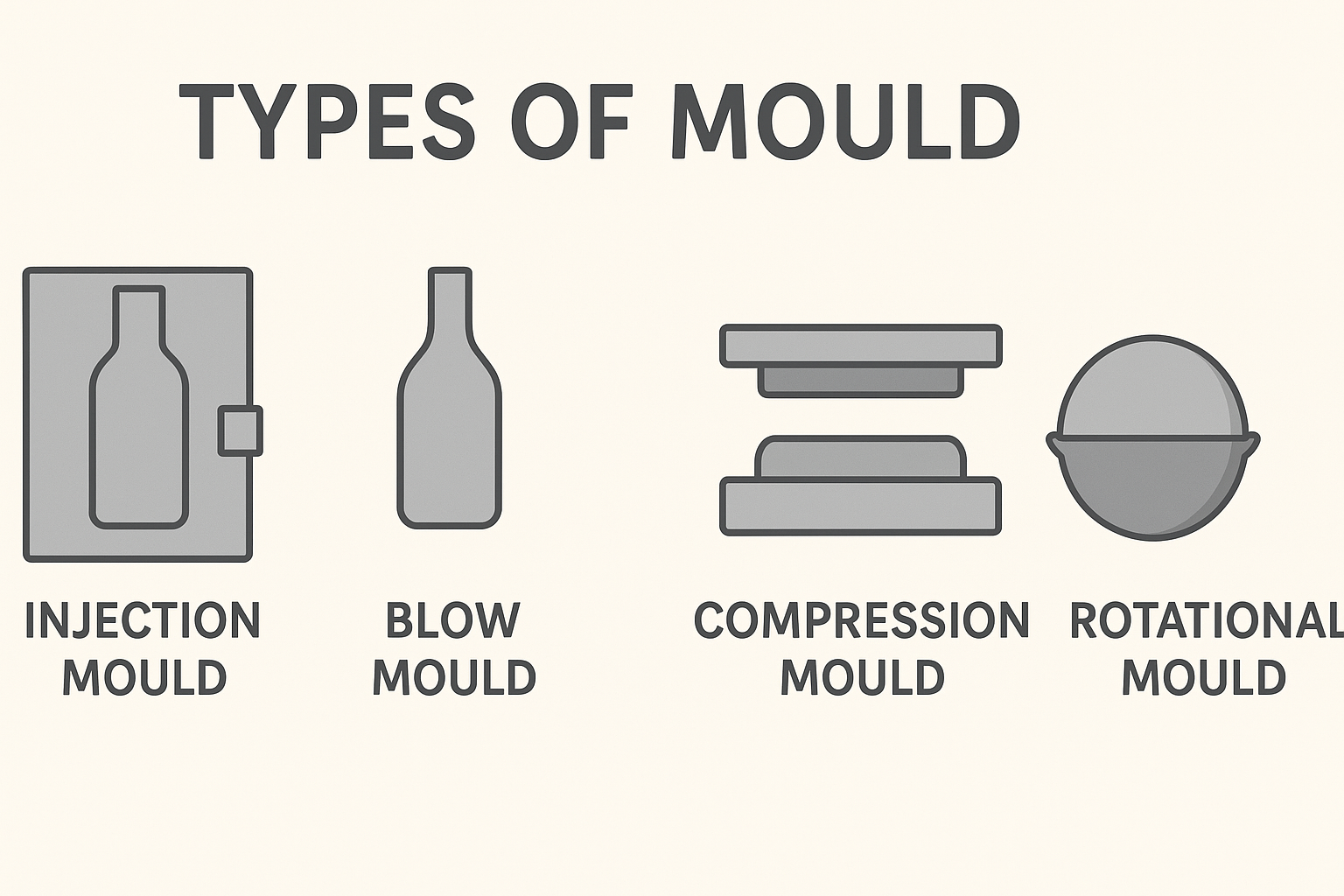
Different Types of Injection Moulds
There are various types of injection moulds used in the injection moulding process, each suited for specific applications depending on the part's design, materials, and production volume. Some of the most common types include:
1. Single-Cavity Moulds
These moulds feature a single cavity and are designed to produce one part at a time. They are ideal for small-batch production, prototyping, or when only a limited quantity of parts is needed.
1. Single-Cavity Moulds
These moulds feature a single cavity and are designed to produce one part at a time. They are ideal for small-batch production, prototyping, or when only a limited quantity of parts is needed.
2. Multi-Cavity Moulds
These moulds feature a single cavity and are designed to produce one part at a time. They are ideal for small-batch production, prototyping, or when only a limited quantity of parts is needed.
3. Stack Moulds
Stack moulds consist of two or more mould halves stacked on top of one another. Each mould half contains one or more cavities, and the halves lock together to form a complete mould. These are commonly used for creating parts with multiple layers, intricate designs, or even different colours.
4. Hot Runner Moulds
Hot runner moulds use a hot runner system to direct molten plastic to the cavities, removing the need for traditional sprues and runners. This system minimizes waste, enhances efficiency, and improves the quality of the parts by keeping the plastic at the correct temperature throughout the injection process.
5. Cold Runner Moulds
Cold runner moulds feature a cold runner system, where the molten plastic flows through the sprue and runner, which is part of the mould. Any plastic left in the runners is typically discarded or recycled, leading to higher waste compared to hot runner systems.
6. Two-Shot Moulds
Two-shot moulds are used for producing parts made of different materials or colours. The process involves injecting one material into the mould, followed by injecting a second material into the same mould, enabling the creation of multi-material or multi-colour parts in a single moulding cycle.
7. Unscrewing Moulds
Unscrewing moulds are designed to create parts with threads, such as bottle caps or screws. They include a mechanism that allows the core of the mould to rotate, forming threads on the part during the injection process.
8. Overmoulding Moulds
Overmoulding is a process where one layer of plastic is injected into the mould, and then another material is injected over it. This method is used to create multi-layer parts with different material properties or colours, such as soft-touch grips or electrical connectors with both rigid and flexible components.
Conclusion
The type of mould chosen for a particular project will depend on factors such as part design, material compatibility, and the required production volume. An experienced mould designer or engineer can provide valuable guidance to select the most suitable mould type for your specific needs.