

Plastic injection molding is recognized as one of the most adaptable and extensively utilized manufacturing techniques spanning numerous industries. Its ability to produce complex shapes with high efficiency makes it indispensable in modern production. However, ensuring the accuracy and consistency of the produced parts is paramount for meeting quality standards and functional requirements. This is where tolerance in plastic injection molding comes into play.
Introduction to Plastic Injection Molding
What is plastic injection molding?
Plastic injection molding entails a manufacturing procedure where liquefied plastic material is forcefully injected into a mold cavity at elevated pressures. Subsequently, as the plastic cools and hardens, the mold is opened, and the finalized part is expelled. This process allows for the mass production of intricate plastic components with high precision.
Importance of tolerance in plastic injection molding
Tolerance refers to the permissible deviation from a specified dimension or geometric feature in a manufactured part. In plastic injection molding, achieving tight tolerances is crucial for ensuring that the produced parts meet design requirements and functional specifications.
Understanding Tolerance in Plastic Injection Molding Definition of toleranceTolerance is the acceptable range of variation in dimensions, geometry, or surface finish of a molded part. It accounts for inevitable deviations that occur during the molding process due to factors such as material behavior, mold design, and processing conditions.
Factors affecting tolerance in plastic injection molding Several factors influence the tolerance achievable in plastic injection molding, including material properties, mold design complexity, processing parameters, and environmental conditions.
Types of Tolerance in Plastic Injection Molding
Geometric toleranceGeometric tolerance refers to the allowable variation in the form, profile, orientation, or location of geometric features on a molded part. It ensures that the part functions correctly and interfaces properly with other components.
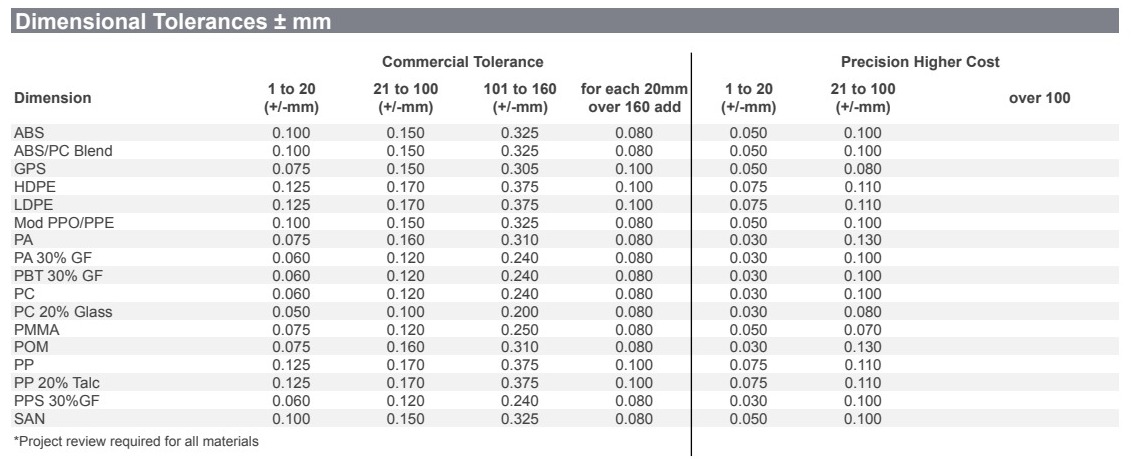
Dimensional toleranceDimensional tolerance pertains to the permissible deviation from specified dimensions in a molded part. It ensures that the part fits within assembly constraints and maintains functional integrity.
Surface finish tolerance
Surface finish tolerance defines the acceptable range of variation in the texture, roughness, or appearance of the surfaces of a molded part. It affects aesthetics, functionality, and performance.
Importance of Tolerance in Plastic Injection Molding
Tight tolerance control is critical in plastic injection molding for several reasons.
Impact on product quality
Tolerance deviations can lead to dimensional inaccuracies, poor fitment, functional issues, or aesthetic flaws in molded parts, compromising product quality and performance.
Cost implications of tolerance variationsExcessive tolerance variations may result in rework, scrap, assembly difficulties, or product failures, leading to increased manufacturing costs and reduced profitability.
Factors Affecting Tolerance in Plastic Injection MoldingAchieving tight tolerances in plastic injection molding requires meticulous attention to various factors.
Material selectionThe choice of plastic material influences its flow characteristics, shrinkage behavior, thermal stability, and dimensional stability, affecting tolerance control.
Design considerationsEffective part design involves optimizing wall thickness, minimizing undercuts, incorporating draft angles, and avoiding sharp corners to facilitate mold filling and minimize distortion.
Processing parametersOptimizing injection molding parameters such as temperature, pressure, injection speed, cooling time, and holding pressure is crucial for controlling shrinkage and minimizing tolerance variations.
Guidelines for Achieving Tight TolerancesEnsuring tight tolerances in plastic injection molding involves following best practices throughout the manufacturing process.
Proper mold designDesigning molds with precise cavity dimensions, adequate venting, uniform cooling, and appropriate gating ensures consistent part quality and dimensional accuracy.
Precision toolingHigh-quality molds, accurate machining, precise tooling components, and proper maintenance are essential for achieving tight tolerances and minimizing defects.
Process optimization techniquesImplementing scientific molding principles, conducting mold flow analysis, performing DOE studies, and employing advanced process monitoring systems enhance tolerance control and process stability.
Common Challenges in Maintaining ToleranceDespite best efforts, various challenges may arise during plastic injection molding that affect tolerance control.
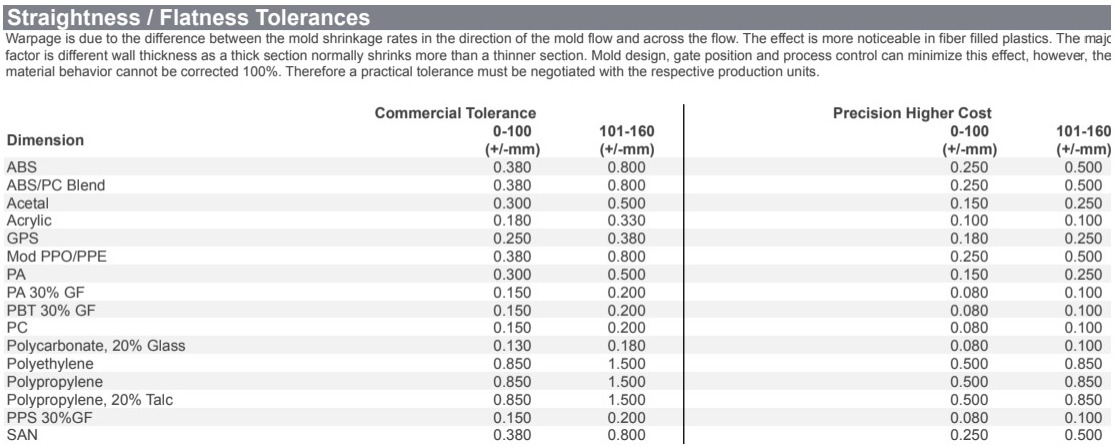
Shrinkage and warpageMaterial shrinkage during cooling and uneven cooling rates can result in dimensional variations, distortion, or warpage in molded parts, affecting tolerance.
Mold wear and tearContinuous use of molds leads to wear, erosion, or deformation of critical surfaces, affecting part geometry and dimensional accuracy.
Environmental factorsFluctuations in ambient temperature, humidity levels, or processing environment can influence material behavior, mold performance, and dimensional stability, impacting tolerance control.
Case Studies: Examples of Tolerance in Plastic Injection MoldingTolerance management plays a vital role in various industries, including automotive, medical, and consumer electronics.
Automotive industryIn automotive manufacturing, tight tolerances are crucial for ensuring the proper fitment of components, optimizing performance, and meeting safety standards.
Medical device manufacturingPrecision and accuracy are paramount in medical device fabrication to ensure product reliability, patient safety, and regulatory compliance.
Consumer electronicsIn the consumer electronics sector, tight tolerances enable the seamless integration of components, enhancing device functionality, aesthetics, and user experience.
Advanced Techniques for Improving ToleranceContinuous advancements in technology offer innovative solutions for enhancing tolerance control in plastic injection molding.
Scientific moldingUtilizing data-driven approaches, advanced simulation software, and real-time process monitoring enables precise control of key molding parameters for achieving tight tolerances.
In-process monitoring systemsImplementing sensor-based monitoring systems allows real-time tracking of critical process parameters such as temperature, pressure, flow rates, and part dimensions. This enables early detection of deviations and facilitates corrective actions to maintain tight tolerances throughout production runs.
Statistical process controlApplying statistical techniques such as control charts, capability analysis, and process capability indices enables systematic monitoring and analysis of process variability. This helps identify trends, root causes of variation, and opportunities for process improvement to enhance tolerance control.
Future Trends in Tolerance Management
Industry 4.0 integrationThe integration of digital technologies, automation, and data analytics under Industry 4.0 enables smarter, more efficient manufacturing processes. Real-time data collection, analysis, and predictive algorithms enhance tolerance prediction and control, optimizing production outcomes.
Predictive maintenance for moldsUtilizing sensor technology and predictive analytics allows proactive maintenance of molds based on performance data and wear patterns. This minimizes downtime, reduces mold-related defects, and ensures consistent part quality and dimensional accuracy.
Enhanced material propertiesAdvancements in material science lead to the development of engineered polymers with improved dimensional stability, reduced shrinkage, and enhanced flow characteristics. These materials offer greater control over tolerance variations, enabling the production of more precise and reliable components.
Conclusion
Plastic injection molding tolerance is a critical aspect of manufacturing that directly impacts product quality, performance, and cost. Understanding the factors influencing tolerance, implementing best practices in design and processing, and leveraging advanced technologies are essential for achieving tight tolerances and maintaining competitiveness in today's market.