
Common Injection Molding Defects and How to Prevent Them
Injection molding defects can arise due to various factors, such as issues with materials, part design, processing parameters, or the tooling used. Below are nine common injection molding defects and suggestions for how to prevent them:
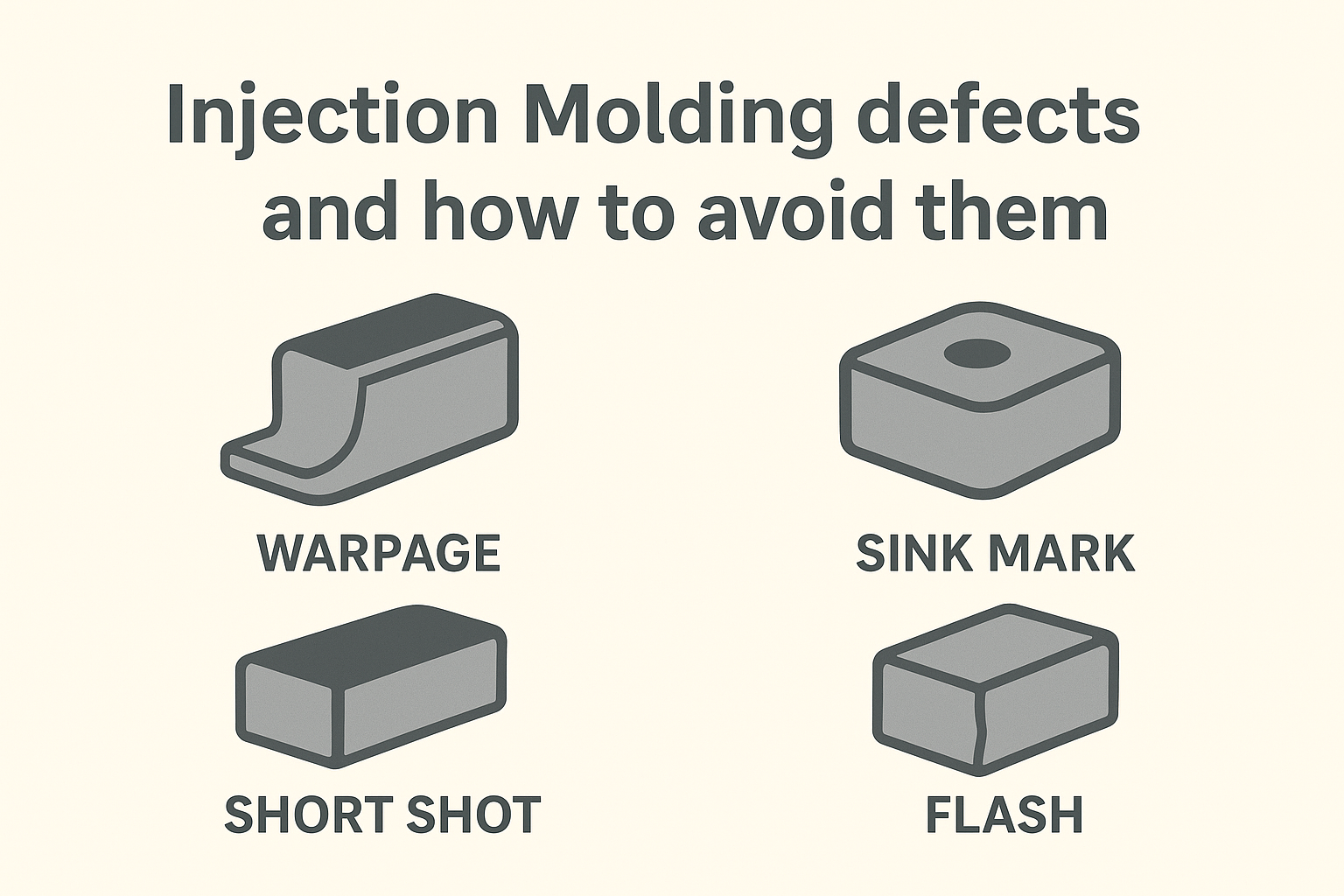
1. Sink Marks
Cause:Uneven cooling or insufficient material packing in certain areas.
Prevention: Increase injection pressure, adjust cooling time and rate, add ribs or use thicker sections in areas prone to sink marks to ensure adequate material flow.
2. Flash
Cause:Excess material escapes between mold halves or ejector pins.
Prevention: Increase clamping force, fine-tune gate size and location, ensure proper alignment of the mold halves, and inspect ejector pins for damage or misalignment.
3. Warping
Cause:Internal stresses caused by uneven cooling or differential material shrinkage.
Prevention: Optimize the cooling cycle, maintain uniform wall thickness throughout the part, place gates correctly, and ensure the mold is well-vented to avoid trapped air.
4. Short Shots
Cause:Insufficient material filling the mold cavity.
Prevention: Increase injection pressure, adjust the melt temperature, optimize gate size and placement, ensure adequate venting, and verify that the shot size is correctly set.
5. Burn Marks
Cause:Excessive heat or degradation of the material during injection.
Prevention: Lower the melt temperature and injection speed, enhance mold venting to allow gases to escape, and use mold release agents or additives to improve flow.
6. Weld Lines
Cause:When two or more flow fronts meet and solidify at different times.
Prevention: Adjust the gate location and size, increase mold and melt temperatures, use higher injection speeds, and modify part design to eliminate or hide weld lines.
7. Weld Lines
Cause:Trapped air or gas pockets inside the molded part.
Prevention: Optimize mold venting to allow air to escape, adjust injection speed and pressure, use gas-assisted molding techniques, and ensure the resin is properly dried to prevent moisture-related issues.
8. Splay Marks
Cause:Moisture in the resin or excessively high melt temperatures leading to material degradation.
Prevention: Dry the resin thoroughly before processing, lower the melt temperature, and ensure adequate cooling time during molding.
9. Overpacking
Cause:Excessive packing pressure or holding time.
Prevention: Fine-tune packing pressure and holding time, reduce holding pressure, adjust the melt temperature, and use a pressure sensor to monitor and control the process.
Conclusion
It’s important to note that the solutions to these defects may vary based on material type, part design, and the specific injection molding machine used. Collaborating with skilled molders and conducting thorough mold trials will help to identify the root cause of defects and optimize the molding process to achieve high-quality results.