
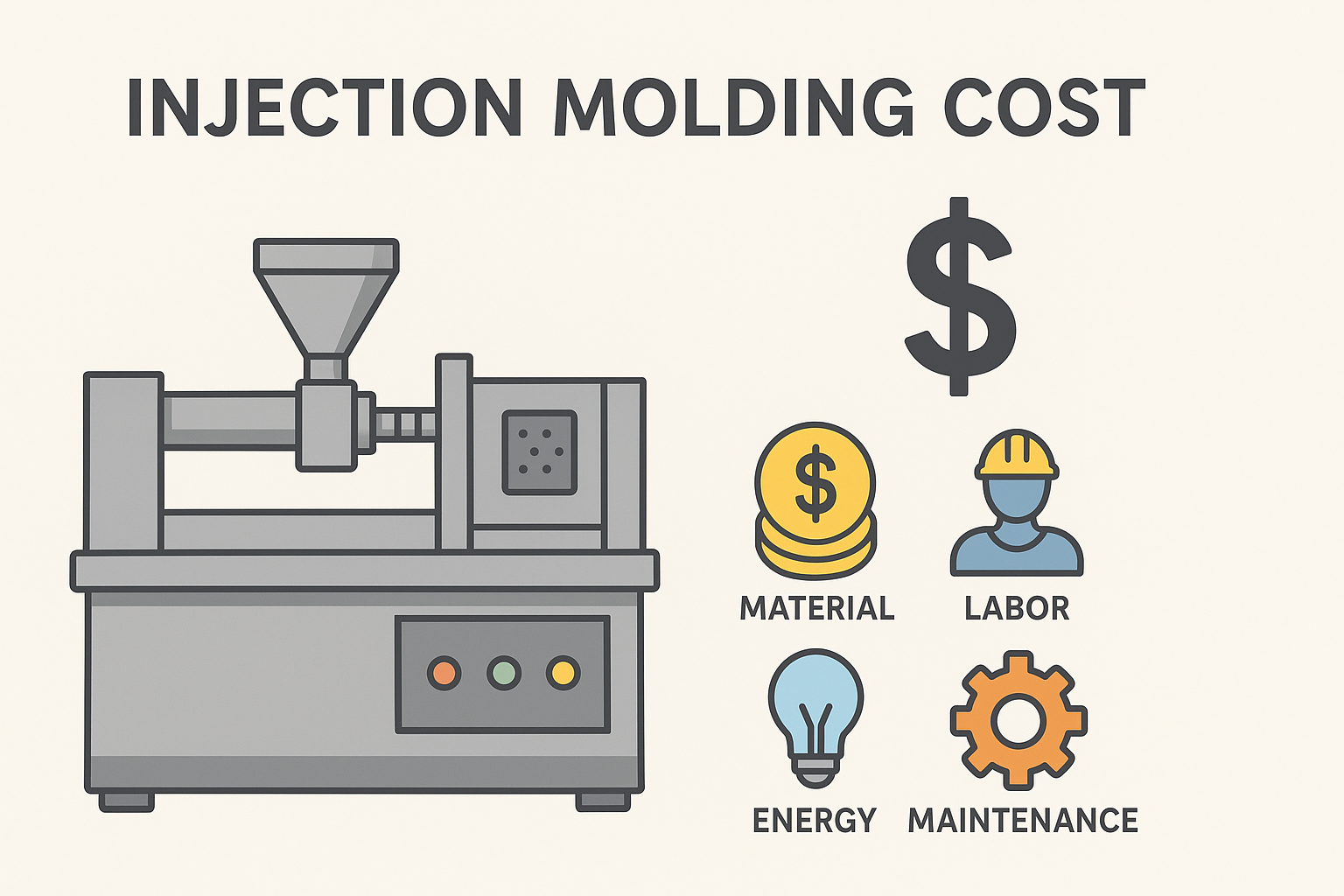
Cost of Injection Moulds
1. Mould Size & Complexity
The cost of an injection mould largely depends on its size and complexity. Simple, small moulds are cheaper, while larger or more complex moulds require more materials and machining, making them more expensive.
2. Material Used
Moulds made from higher-quality materials, such as hardened steel, cost more than those made from standard materials like P20 steel.
3. Number of Cavities
Single-cavity moulds are less expensive compared to multi-cavity moulds, which can produce several parts in one cycle and thus cost more.
4. Surface Finish & Tolerances
Moulds requiring fine surface finishes or tight tolerances will cost more due to the precise machining needed to achieve these specifications.
5. Lead Time
The time required to manufacture the mould affects its cost. Expedited lead times or quicker delivery can increase the price.
6. Cost Estimates
A basic, single-cavity mould for a small plastic part with P20 steel can range from $5,000 to $20,000. Multi-cavity moulds can range from $25,000 to $100,000 or more, depending on complexity
7. Location of Manufacturer
Mould makers in regions with lower labour costs can offer cheaper prices, so the location of the manufacturer can influence overall costs.
8. One-Time Cost
While the initial cost of the mould may be high, it is a one-time investment. As production volumes grow, the per-unit cost decreases, making it more cost-effective for large runs.
9. Getting Quotes
It's a good idea to get quotes from several mould makers to compare prices. However, don't choose the cheapest option without considering the quality and experience of the manufacturer. Quality and reputation are just as important as price.